
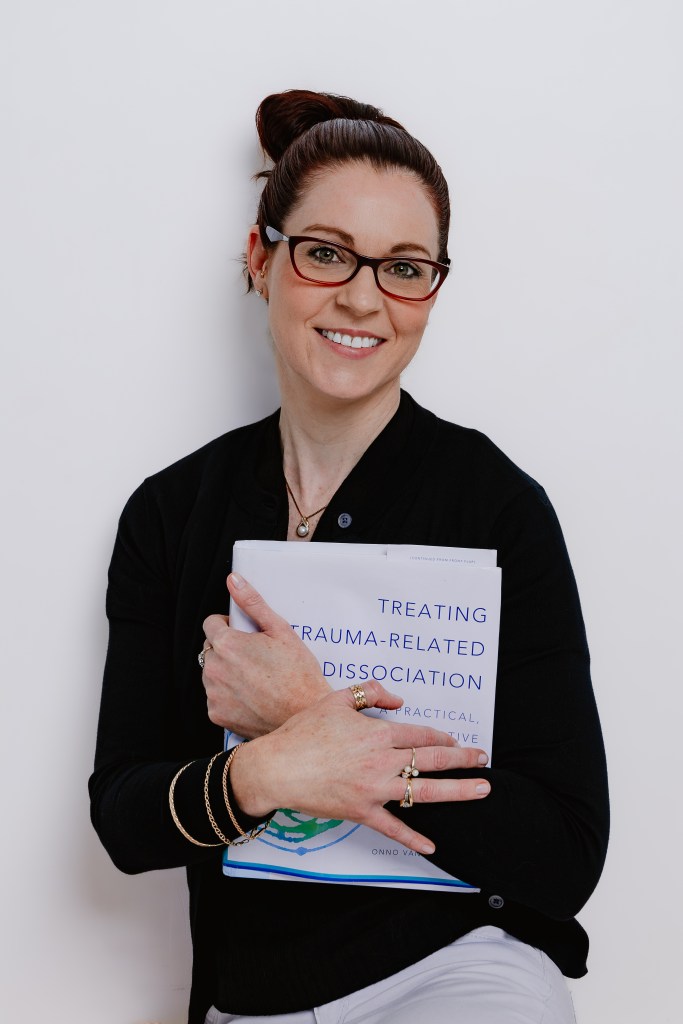
Sherry-Lee Smith
Principal Psychologist/Credentialled Eating Disorder Clinician/Accredited EMDR Consultant
Phoenix Holistic Health Centre – Perth, Western Australia
What is EMDR therapy?
EMDR (Eye Movement Desensitisation and Reprocessing) was originally developed by Francine Shapiro in 1987 and has become an integrative psychotherapy approach that is used internationally. It is an empirically supported (evidenced-based) comprehensive approach to therapy that was originally developed for the treatment of trauma and is now widely used for many different mental health issues. EMDR is based on the Adaptive Information Processing Model (AIP) and is a 3-pronged psychotherapy approach that focuses on the past, present and future.
The AIP model posits that at the root of mental health challenges lies in memories of earlier life experiences that have been incompletely processed by the psyche’s natural information processing systems, kind of like your body not completely and effectively processing your food. EMDR treatment focuses on processing neurophysiologically stored memories of past events, in other words, reprocessing information that is stored in the brain and in the body. EMDR is a comprehensive approach that aims to understand the bio-psycho-social (biological, psychological and social) context of a person’s mental health issues to create an overall clinical understanding of a client’s present difficulties and how they are related to distressing past experiences that haven’t been processing effectively and trigger distress and unhelpful behavioural patterns.
EMDR therapy is not a bandaid solution for mental health challenges focusing only on symptoms management. EMDR and the AIP model helps mental health professionals discern the underlying causes or psychological mechanisms that are generating mental health issues in the first place. And then address the these causes at a deeper psychological level.
How does EMDR therapy work?
By processing past memories, EMDR can develop new adaptive neural networks (memory networks in the brain), to decrease emotional and physiological distress resulting in more helpful behavioural responses. A skilled EMDR practitioner will help the client identify past experiences that are related to their current difficulties, ascertain present triggers that lead to distress and unhelpful behaviours and develop psychological templates for helpful behavioural responses to help them effectively manage current and future situations in their life. With a very strategic approach the practitioner aims to create profound treatment effects in the shortest possible time. You can think of EMDR as removing the roots of the weeds in a garden rather than just chopping off the top of the weed, only to have it grow back later.
There are 8 phases of EMDR therapy.
- Phase 1 – History taking (which involves gathering background information related to presenting concerns, assessing suitability of EMDR as a treatment approach and identifying/mapping target memories for EMDR processing)
- Phase 2 – Preparation – preparing clients for processing targets. Working with parts of self to enhance EMDR processing if necessary. Stabilisation and developing skills to improve regulation of emotions. Resource development and installation if necessary.
- Phase 3 – Assessment – of the target/s to be processed that sessions
- Phase 4 – Desensitisation – processing targets to reduce subjective distress. Processing associated memories or associations.
- Phase 5 – Installation – of a positive thoughts, strengthen of positive memory networks, increasing connections between the target as associated positive memory networks, installing templates for future positive experiences
- Phase 6 – Body Scan – complete processing of residual distress held within the body.
- Phase 7 – Closure – reflection and stabilisation to complete the session.
- Phase 8 – Re-evaluation – occurs at the next session, evaluates the effects of the treatment sessions. Therapy may move between phases depending on how targets are processing and how the overall treatment plan is progressing.
Can I do EMDR therapy on myself?
It is not recommended that people conduct EMDR on themselves. Training in EMDR is restricted to only those who are registered and qualified as mental health professionals.
What issues can EMDR be used for?
EMDR is a transdiagnostic therapy. That means that it can be used for many different types of mental health challenges. Although EMDR was originally developed to treat trauma, EMDR is now regularly used with a wide variety of issues and many different EMDR protocols have been developed. Some of these include (but are not limited to);
- Addictions
- Somatoform disorders
- Sexual dysfunction
- Eating disorders
- Body Image
- Personality disorders
- Mood disorders like depression
- Reaction to severe stress
- Anxiety disorders (generalised anxiety, panic disorder, dental anxiety, performance anxiety, phobias)
- Insomnia
- Pain
- Trauma
How to choose an EMDR Therapist?
As mentioned above, only registered and qualified mental health professionals are permitted to train in EMDR. All individual’s that have completed their basic EMDR training are eligible to become member of the EMDR Association of Australia and New Zealand (EMDRAA). If you are wanting to seek EMDR therapy, it is important to chose a professional that has trained through an EMDRAA accredited training program. These training programs are comprehensive training packages that include a significant amount of practical experience delivering and receiving EMDR, as well as consultation on the implementation of EMDR in clinical practice.
Once a professional has completed their basic training, they are then eligible to undertake their accreditation in EMDR. This is a rigorous program designed to ensure that all EMDRAA Accredited EMDR Practitioners meet a high standard of fidelity in the therapy and have extensive experience and consultation in the application of EMDR.
Some accredited EMDR Practitioner’s then chose to undertake further advanced EMDR trainings, consultation, and evaluation to become EMDRAA accredited EMDR Consultants. These consultants are then able to guide other’s in integrating basic and advanced EMDR techniques across a range of different presentations.
When looking for an EMDR therapist it is recommended that you find someone who has done an EMDRAA accredited training program, and ideally has further training in the application of EMDR with the issues that you are presenting to therapy for. If you are not sure whether the therapist you are considering seeing has done this, you can either ask them or the EMDRAA website has a list of members, accredited EMDR practitioners and accredited EMDR Consultants.
Who is Sherry-Lee Smith?
Sherry is and EMDRAA Accredited EMDR Consultant and Practicum Facilitator at EMDRAA accredited training. She also delivers training on advanced EMDR protocols to other EMDR therapists. She is the Founder of the online EMDR Interest Group for EMDR Therapists across Australia and New Zealand. She is a member of the EMDR Association of Australia and the EMDR Interest Group for the Australian Psychological Society. Sherry also has advanced training in schema therapy which she regularly integrates with EMDR.
Sherry-Lee Smith
Principal Psychologist/Accredited EMDR Consultant/Accredited Eating Disorder Clinician
Director of the Phoenix Holistic Health Centre
Upstairs Unit 4 / 131 Herdsman Parade
Wembley PERTH WA 6014
References:
Shapiro, F (2018). Eye Movement Desensitization and Reprocessing (EMDR) Therapy: Basic principles, protocols and Procedures (3rd Ed). Guilford Publications: New York.
Shapiro, F., & Laliotis, D (2011). EMDR and the Adaptive Information Processing Model: Integrative Treatment and Case Conceptualisation, Clinical Social Work Journal (39), 191-200.
 Phoenix Holistic Health Centre Perth